

Roof flashing serves as your home’s critical defense system against water damage, particularly because it covers vulnerable transition areas, joints, and intersections. For Denver homeowners, understanding the roof flashing lifespan isn’t just helpful, it’s essential for maintaining your property’s structural integrity through Colorado’s unique climate challenges. From heavy snowfall to intense UV exposure and dramatic temperature fluctuations, Denver’s weather puts exceptional demands on roofing materials.
The longevity of your roof flashing depends significantly on installation quality, material selection, and regular maintenance. Local roofing experts recommend inspections after major weather events, as Denver’s hailstorms and rapid temperature changes can cause deterioration to accelerate. Knowing the signs of roof flashing deterioration and understanding the impact of Colorado’s weather patterns helps homeowners make informed decisions about maintenance and replacement timelines.
Typical Lifespan Expectations for Different Flashing Materials
When investing in roof flashing, Denver homeowners should understand the significant variations in longevity between materials. Copper flashing stands out as the premium option, offering an impressive 70 to 100-year lifespan when properly installed. This exceptional durability makes it ideal for homes meant to last generations, despite its higher initial investment. Stainless steel follows with a 50 to 75-year expected service life, offering excellent resistance against harsh Colorado winters.
Aluminum flashing typically performs well for around 25 to 30 years in Denver’s climate, providing a good balance of cost and longevity. Galvanized steel, while strong, generally requires replacement after 15 to 20 years, as our freeze-thaw cycles speed up the rate of corrosion. The most economical option, vinyl flashing, typically needs replacement within 10 years as UV exposure in our high-altitude environment causes degradation.
It’s crucial to note that these lifespans reflect the best conditions. Poor installation dramatically reduces longevity regardless of a material’s quality. Professional installation ensures proper integration with underlayment and shingles, preventing premature failure. For maximum roof flashing durability, Denver homeowners should consider how material choices align with their home’s architecture and their long-term plans for ownership. Regular inspections help identify signs of roof flashing deterioration before water damage occurs, particularly after extreme weather events.
The Effects of Denver Weather on Flashing Durability
Denver’s unique climate creates exceptional challenges for roof flashing durability. The Mile High City experiences some of the most intense UV radiation in the country, which accelerates the breakdown of flashing materials. This level of solar exposure, combined with dramatic temperature swings, often more than 40 degrees in a single day, creates continuous expansion and contraction cycles that stress flashing connections and seals.
Hailstorms present another significant threat to Denver roofing systems. Colorado’s Front Range experiences more damaging hail events than almost anywhere else in the United States. These impacts can dent, crack, or completely compromise flashing, particularly around vulnerable parts of the roof like vents and chimneys. Even small deformations can create entry points for moisture.
Winter brings its own set of challenges with freeze-thaw cycles. When snow melts during the warmth of the day, then refreezes overnight, it creates ice dams that force water under the flashing. Meanwhile, summer heat reaching more than 90 degrees can cause metal flashing to expand significantly, potentially warping or pulling away from attachment points.
For Denver homeowners, these climate factors mean standard flashing lifespan estimates may need adjustment. Professional roofers familiar with local conditions can recommend appropriate materials and installation techniques specifically designed to withstand Colorado’s weather extremes, helping to extend the lifespan of roof flashing despite these challenging conditions.
How To Tell That Roof Flashing Is Failing
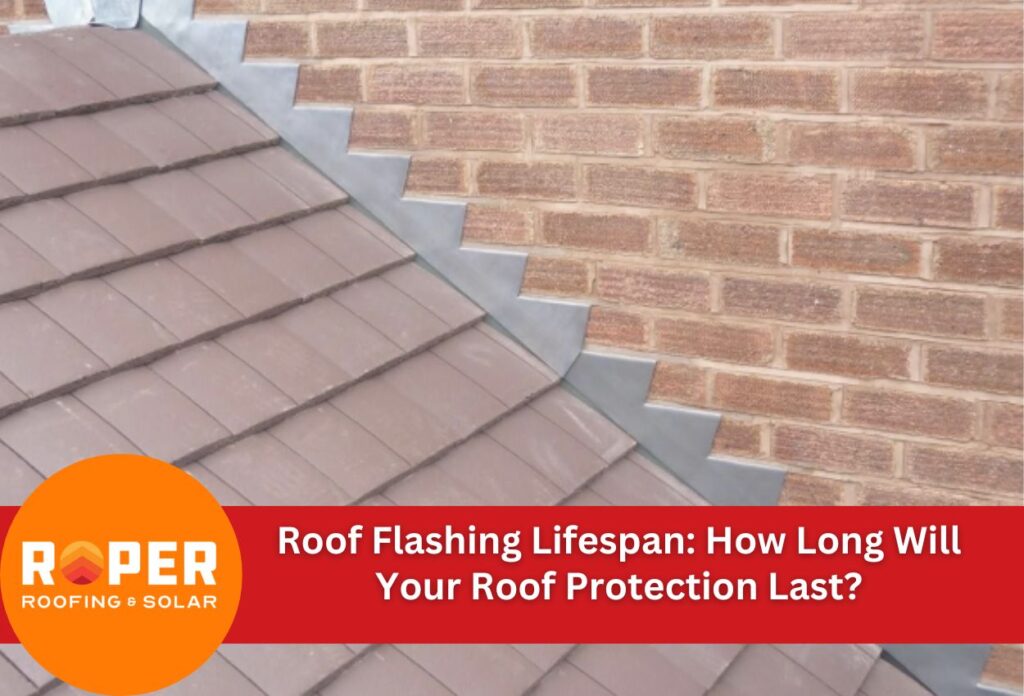
Knowing what damaged roof flashing looks like helps Denver homeowners save thousands in potential water damage repairs. The most common visual warning signs include rust streaks or stains extending from flashing areas, which indicate moisture penetration and metal corrosion. Pay particular attention to seams that become separated in areas where flashing sections meet. Even small gaps can allow significant water in during Colorado’s heavy rain or periods of snowmelt.
Damaged or cracked sealant around flashing is another red flag. This protective barrier often deteriorates faster than the flashing itself, especially under Denver’s intense UV exposure. Watch for sealant that appears dried out, cracked, or pulling away from surfaces. Warped or buckled flashing sections suggest the metal has experienced extreme temperature fluctuations, compromising its water-shedding capabilities.
Interior warning signs are equally important to monitor. Water stains on ceilings or walls near chimneys, skylights, dormers, or roof valleys almost always indicate flashing failures. These stains may appear brown, yellow, or gray and often expand during precipitation events. Unexplained mold or mildew in attic spaces can signal moisture infiltration through compromised flashing before visible leaks develop inside living areas.
Professional roofing contractors recommend that Denver homeowners inspect flashing areas twice a year and after severe weather events. Catching these warning signs early allows for targeted repairs that can significantly extend the overall roof flashing lifespan, preventing the cascading damage that occurs when water enters your home’s structure.
Maintenance Practices to Maximize Flashing Lifespan
Preserving your roof flashing requires deliberate care, especially in Denver’s challenging climate. Establishing a consistent maintenance routine can significantly extend roof flashing durability while preventing costly water damage. Many homeowners overlook these critical roof components until problems arise, but proactive care delivers substantial returns through extended service life and enhanced home protection.
For Denver homes, seasonal maintenance should follow the natural weather patterns of our region. Spring inspections should focus on clearing winter debris and examining for damage from freeze-thaw cycles. Summer maintenance includes checking sealants that may have deteriorated from UV exposure. Fall preparation involves clearing gutters and ensuring proper drainage before winter. After hailstorms, prompt inspection of flashing around vents, chimneys, and valleys can identify dents or displacement before water infiltration occurs.
Professional maintenance complements homeowner vigilance. Qualified Denver roofing contractors recommend comprehensive roof inspections every 2 to 3 years, with more frequent checks for older roofing systems. These professionals can safely access steep pitches, properly reseal flashing joints, and identify patterns of deterioration that might escape untrained eyes. They’ll also verify that flashing remains properly fastened and sealed against our region’s high winds and precipitation. Through consistent maintenance, homeowners can often add 5 to 10 years to the lifespan of their roof flashing while ensuring continuous protection for their property investment.
When Replacement Becomes Necessary: Timing Your Flashing Update
Determining when to repair versus replace damaged flashing is a critical decision for Denver homeowners. As a general guideline, if your flashing shows isolated damage but is less than 15 years old, repairs may be enough. However, when deterioration affects more than 30% of the flashing surface, replacement typically becomes more cost-effective. Extensive rust, multiple leaks, or flashing that has pulled away from the roofing structure are clear indicators that replacement cannot be delayed.
The age of your existing roof should heavily influence your flashing decisions. If your roof is approaching the end of its functional life (within 3 to 5 years of needing replacement), coordinating complete flashing replacement with your upcoming project makes financial sense. Colorado’s extreme weather patterns often accelerate the deterioration of both systems simultaneously, making this combined approach practical for many Denver homes.
Modern Flashing Innovations for Longer-Lasting Roof Protection
Today’s flashing technology has evolved significantly to combat Colorado’s harsh climate. Self-adhering flashing membranes represent one of the most important advancements, creating seamless waterproof barriers that conform perfectly to irregular surfaces. These flexible membranes eliminate many of the failure points associated with traditional metal flashing while providing superior protection along roof transitions and penetrations. For Denver homes, these products offer exceptional resilience against the freeze-thaw cycles that frequently compromise conventional installations.
High-performance metal flashing systems have also transformed roof protection capabilities. Composite metals with specialized coatings resist corrosion even in Colorado’s most extreme conditions. Zinc-aluminum alloys provide substantially longer service life than traditional galvanized products, often lasting more than 30 years with minimal maintenance. These advanced metals maintain their integrity despite Denver’s intense UV radiation and dramatic temperature fluctuations.
Sustainable flashing options now include metals made of recycled content that complement eco-friendly roofing systems. These products deliver exceptional roof flashing durability while reducing environmental impact. When professionally installed, these innovative flashing systems can extend protection far beyond traditional materials, providing Denver homeowners with longer-lasting, more reliable roof performance in our challenging mountain range.
Ensure The Roof of Your Denver Home Lasts with Roper Roofing & Solar
If you’re concerned about the longevity of your roof flashing, especially under the challenging Denver climate, it’s crucial to choose a reliable service that specializes in both traditional and innovative roofing solutions. Roper Roofing & Solar offers expert installation and maintenance that can dramatically extend the life of your roof’s flashing. With options ranging from copper to high-performance metals, our tailored solutions cater to the specific needs of your home.
Don’t wait for visible damage to take action. Regular inspections and maintenance by professionals can prevent expensive repairs and extend the durability of your roof flashing. Call Roper Roofing & Solar today at (720) 475-1065 to schedule a comprehensive roof assessment and ensure your home remains protected in all seasons.