


Synthetic vs. Felt Roof Underlayment: Which Is Better for Your Denver Home?
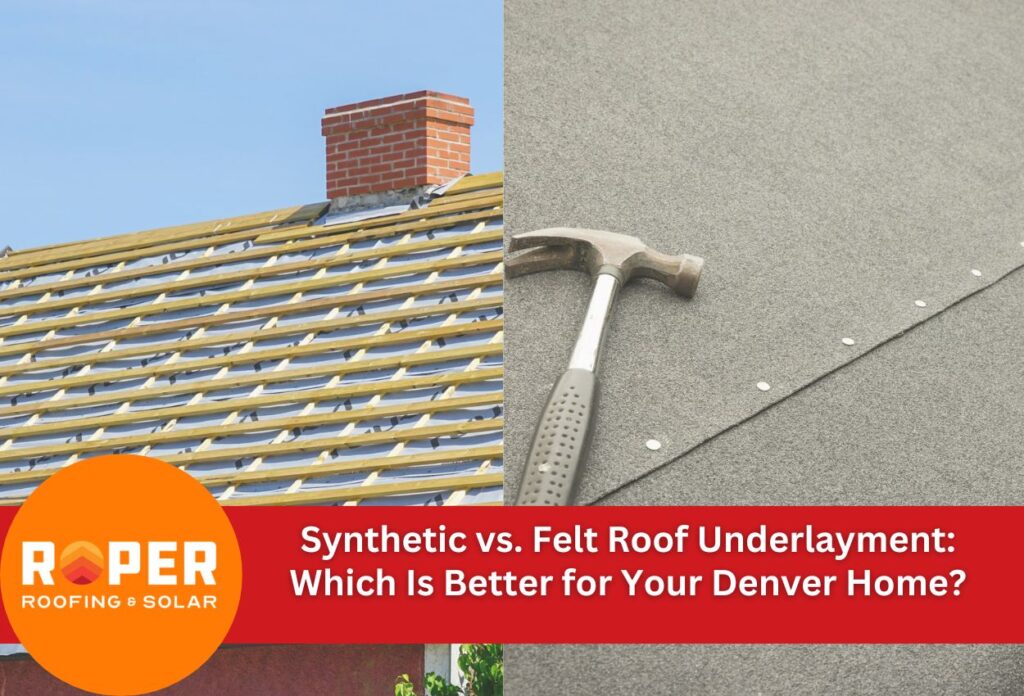
While it’s not commonly thought about since it’s covered, roof underlayment is one of the most important elements of your home’s defense system against water damage, wind-driven rain, and harsh weather conditions. This protective barrier sits directly beneath your roofing material and impacts whether or not you deal with a minor leak or major structural damage during Colorado’s unpredictable weather patterns.
Two primary types of roof underlayment dominate today’s market: traditional asphalt-saturated felt underlayment and modern synthetic roof underlayment. Each option brings distinct advantages and considerations that directly impact your roof’s performance and longevity.
Felt paper roof underlayment has protected homes for decades with its proven track record of durability and budget-friendly price. This traditional material offers reliable water resistance and remains a popular choice among homeowners seeking cost-effective protection.
Synthetic roof underlayment represents the newer generation of roofing technology, engineered to withstand extreme temperatures, resist tears, and provide superior moisture protection. The benefits of synthetic roof underlayment include enhanced durability and improved installation efficiency.
Understanding the key differences between synthetic vs. felt roof underlayment helps homeowners make informed decisions based on their specific needs, budget, and long-term roofing goals. The choice between these types of underlayment affects both immediate project costs and future maintenance requirements.
Understanding Traditional Felt Paper Underlayment
Asphalt-saturated felt underlayment consists of organic or fiberglass mat base materials thoroughly saturated with asphalt compounds. The manufacturing process involves saturating the base material with hot asphalt, creating a water-resistant barrier that effectively sheds moisture away from roof decking. This time-tested material has protected residential roofs for over a century, earning its reputation through consistent performance across diverse weather conditions.
Traditional felt paper roof underlayment comes in several standard weights and grades, each designed for specific applications. The most common options include #15 and #30 felt, with the numbers indicating the weight in pounds per 100 square feet of coverage. The best option for standard residential project is #15 roofing felt, rated for moderate weather exposure, while #30 roofing felt provides enhanced protection for areas experiencing severe weather conditions or steeper roof slopes.
Different types of roof underlayment within the felt category also include perforated and non-perforated versions. Perforated felt allows trapped moisture to escape, reducing the risk of condensation buildup beneath shingles. Non-perforated felt offers maximum water resistance but requires proper ventilation to prevent moisture accumulation. Understanding these variations helps homeowners select the appropriate felt grade based on their roof’s specific requirements and local climate conditions.
Modern Synthetic Underlayment Materials
Synthetic underlayment manufacturing utilizes advanced polymer materials, primarily polypropylene and polyethylene, engineered to surpass traditional felt performance. These materials undergo specialized weaving or laminating processes that create lightweight yet incredibly strong protective barriers. The manufacturing process involves combining multiple polymer layers with reinforcing fibers, resulting in a product that resists tearing, stretching, and UV degradation far better than asphalt-saturated felt underlayment.
The benefits of synthetic roof underlayment stem from these advanced materials and construction methods. Unlike felt paper roof underlayment, synthetic products remain stable in extreme temperatures without becoming brittle in cold conditions or soft in high heat. This temperature stability proves particularly valuable during installation and long-term performance.
Various synthetic products offer unique features that distinguish them from other options in today’s market. Some manufacturers incorporate slip-resistant surfaces for safer installation, while others include printed alignment guides to ensure proper overlap. Regardless of the feature, premium synthetic options feature enhanced breathability that allows moisture vapor to escape while blocking liquid water infiltration. These innovations address common installation challenges and provide superior protection compared to traditional options.
The different types of roof underlayment in the synthetic category include standard-weight versions for typical applications and heavy-duty products designed for high-wind zones or premium installations. Advanced underlayment installation methods take advantage of synthetic materials’ tear resistance and dimensional stability, allowing for faster installation with fewer weather delays during roofing projects.
Comparing Options for Durability and Weather Resistance
Denver’s extreme weather conditions create demanding tests for roof underlayment performance. Hailstorms, rapid temperature fluctuations, and intense UV exposure challenge both synthetic and. felt roof underlayment materials in different ways. Understanding how each material responds to these conditions helps determine the best long-term investment for your roof protection.
Synthetic roof underlayment demonstrates superior resistance to temperature swings that characterize Colorado’s climate. These materials maintain their flexibility and strength whether temperatures drop below 0 or soar above 100 degrees Fahrenheit. The benefits of synthetic roof underlayment become particularly noticeable during hailstorms, where the material’s tear resistance prevents punctures that could compromise water protection. UV exposure also affects synthetic materials less severely, as manufacturers engineer these products with stabilizers that prevent degradation from prolonged sun exposure.
Felt paper roof underlayment faces greater challenges in extreme weather conditions. Temperature swings can cause felt to become brittle in cold weather or soft during hot periods, affecting its protective capabilities. Hail impact often creates tears in felt materials more easily than synthetic alternatives. Asphalt-saturated felt underlayment also experiences faster UV degradation when exposed to direct sunlight for extended periods.
There are also significant differences between the types of roof underlayment in terms of water resistance. Synthetic materials typically offer superior water resistance with better sealing around fasteners and overlaps. Long-term performance studies show synthetic options also maintain their protective qualities longer, while felt materials may require earlier replacement due to weather-related deterioration affecting the overall effectiveness of the underlayment installation methods.
Installation Differences and Requirements
Installing felt paper roof underlayment follows traditional methods that most roofing contractors know well. The process begins with rolling out the material across the roof deck, starting from the lowest edge and working upward. Felt requires careful handling during installation because the material tears easily when wet or stressed. Contractors will have to wait for dry conditions and use specific techniques to prevent damage during the installation. Standard roofing nails or staples secure the material, with overlaps of at least 2 inches on horizontal seams and 4 inches on end laps.
Synthetic roof underlayment installation offers several advantages that reduce project complexity and timeline concerns. These materials resist tearing during installation, allowing contractors to work more efficiently without worrying about accidental damage. The benefits of synthetic roof underlayment include the ability to install it during light moisture conditions that would typically stop felt installation. Many synthetic products also feature printed guidelines that help ensure proper overlap spacing, reducing installation errors and improving overall protection.
There is a slight difference in the types of tools and techniques used between these types of roof underlayment. Asphalt-saturated felt underlayment requires traditional fastening methods with careful attention to temperature conditions. Hot weather makes felt sticky and difficult to handle, while cold conditions increase brittleness and its chance of tearing. Synthetic materials require fewer specialized handling techniques and can accommodate standard fastening equipment without modification.
Time requirements differ substantially between underlayment installation methods. Synthetic materials typically reduce installation time by 20% to 30% compared to felt options, allowing roofing projects to progress more quickly and reducing labor expenses associated with extended installation periods.
Cost Considerations and Value Analysis
Material expenses for synthetic vs. felt roof underlayment reveal significant upfront differences that impact project budgets. Asphalt-saturated felt underlayment typically costs considerably less per square foot than synthetic alternatives, making it an attractive option for budget-conscious homeowners.
Labor factors influence the total investment beyond material costs alone. The benefits of synthetic roof underlayment include faster installation times that reduce labor expenses, often offsetting some of the higher material costs. Experienced contractors can install synthetic materials more efficiently due to their tear resistance and handling characteristics. Weather delays affect felt installations more frequently, potentially extending project timelines and increasing labor costs when conditions prevent work completion.
Long-term value assessment shows synthetic underlayment typically lasting 25 to 30 years compared to felt materials averaging 15 to 20 years before replacement becomes necessary. This extended lifespan reduces future replacement costs and minimizes disruption to your home. Maintenance needs remain minimal for both options once properly installed, though synthetic materials resist damage better from minor roof repairs or maintenance activities.
Warranty coverage may also affect the overall value calculation for some homeowners. Many manufacturers offer enhanced warranties when premium synthetic underlayment accompanies their shingle installations. These extended warranty terms provide additional value that factors into determining the total cost. Proper underlayment installation methods for either type of material ensures warranty compliance and maximizes protection for your roofing system over its expected lifespan.
Making the Best Choice for Your Roofing Project
Selecting the best underlayment requires carefully evaluating your roof’s specific characteristics and performance requirements. Steep-slope roofs benefit from the superior tear resistance that synthetic materials offer, while low-slope applications may accommodate felt paper roof underlayment effectively. Consider your roof’s age and expected replacement timeline when weighing synthetic vs. felt roof underlayment options, as installing premium synthetic materials on aging roofs may not provide the best return on investment when you have to replace it in a few years.
Climate significantly influences how you can expect the underlayment to perform. Areas experiencing frequent hail, extreme temperature swings, or intense UV exposure favor synthetic materials for their enhanced durability. The benefits of synthetic roof underlayment become particularly valuable in regions with harsh weather patterns that challenge traditional materials. Meanwhile, areas with mild weather patterns may be able to get asphalt-saturated felt underlayment to perform well enough throughout its expected lifespan.
Budget parameters directly impact material selection between the available types of roof underlayment. Homeowners prioritizing immediate savings often choose felt options, while those focusing on long-term value typically select synthetic alternatives. Factor installation efficiency into your budget calculations, as faster synthetic installation reduces labor expenses that partially offset higher material costs.
Essential contractor questions include their experience with specific underlayment installation methods and their recommendations based on your roof’s characteristics. Ask about warranty implications for different material choices and expected performance timelines. Verify their familiarity with proper installation techniques for your chosen underlayment type to ensure optimal protection and longevity for your roofing system investment.
Denver’s Best Underlayment: Synthetic vs. Felt Roof Underlayment
When considering the best underlayment for your roofing project in Denver, understanding the specific benefits of synthetic and felt options is crucial. Each material offers unique advantages that could make a significant difference in the durability and performance of your roof. Whether you’re concerned about the harsh weather conditions in Colorado or the long-term value of your roofing investment, making an informed choice is essential.
To ensure your home is equipped with the best possible protection, consider consulting with experts who specialize in both synthetic and felt roof underlayment. Roper Roofing & Solar can guide you through the selection process, ensuring that your choice not only meets your immediate needs but also aligns with long-term durability and cost-effectiveness.
Don’t wait until it’s too late to optimize your roof’s defense against Denver’s unpredictable weather. Call Roper Roofing & Solar today at (720) 475-1065 to discuss your underlayment options and secure the best possible outcome for your roofing project.