


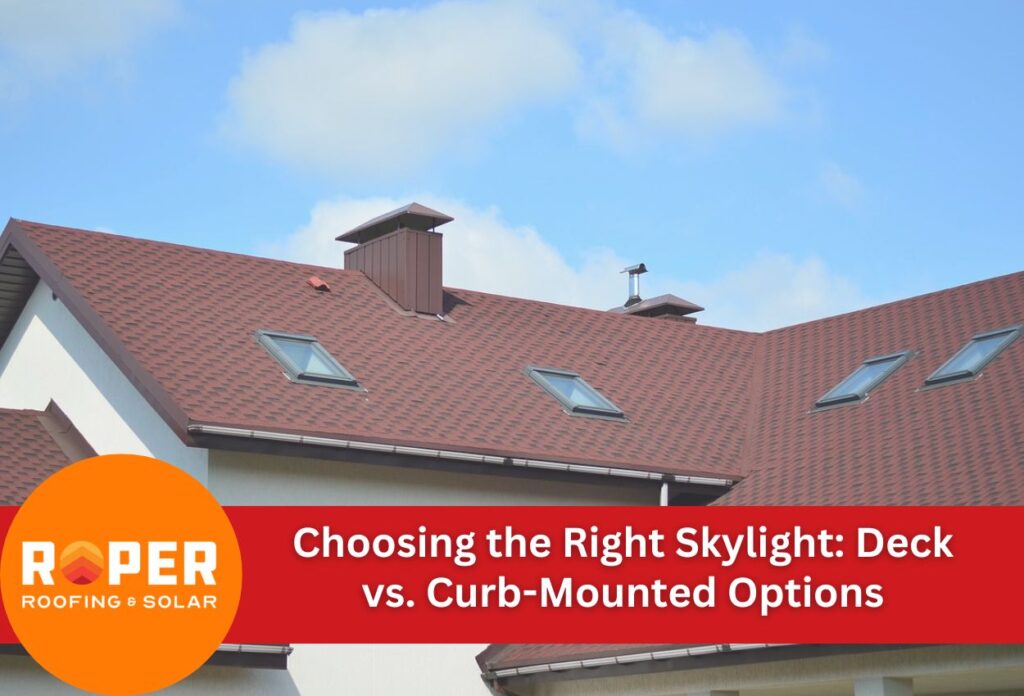
When considering a skylight installation for your Denver home, one of the first decisions you’ll face is choosing between deck-mounted and curb-mounted options. This choice significantly impacts not only the appearance of your skylight but also its performance, installation requirements, and suitability for your specific roofing structure.
Deck-mounted skylights attach directly to the roof deck, creating a sleek, low-profile appearance that many homeowners prefer. These skylights sit flush with the roofline, making them particularly popular in residential areas where visual appeal is a priority.
Curb-mounted skylights, on the other hand, attach to a raised frame, also known as a curb, that elevates the skylight above the roofing surface. This traditional mounting method provides additional flexibility for various types of roofs and is often recommended for flat roofs or in regions with heavy snowfall, such as Colorado.
The right choice between these two mounting systems depends on several factors: your roof’s pitch and construction, local weather conditions, desired appearance, and specific performance needs. For Colorado homeowners, considering our unique climate with significant snow loads and intense sun exposure becomes particularly important when selecting the appropriate skylight installation method.
Understanding Skylight Mounting Basics: Installation Fundamentals
The technical differences between a deck-mounted and curb-mounted skylight begin with how they are integrated with the roofline. Deck-mounted skylights are installed directly against the roof deck, creating a seamless appearance with the glazing sitting nearly flush with the roof surface. This mounting type requires precise flashing systems that integrate with your roofing material to create a watertight seal without the need for a raised frame.
Curb-mounted skylights attach to a box-like frame that extends above the roofline. The frame is the curb, and it allows water to flow around the skylight rather than directly against it, which is especially beneficial for Colorado homes that experience heavy snowfall and spring runoff. The curb itself is typically constructed from lumber and must be properly flashed to prevent leaks.
The complexity of the installation also varies significantly between these methods. Deck-mounted installations generally require more precise measurements and carpentry work as they integrate directly with the roofing structure. Curb-mounted installations involve building the frame first, then attaching the skylight unit, which can offer more leniency with measurements and alignment.
Both installation types require roof deck modifications, including cutting an opening in your roof. For Denver area homes, professional installation is recommended regardless of the mounting type chosen, since proper waterproofing techniques are essential in our climate with both intense sun and heavy precipitation throughout the year.
How Different Types of Mounting Handle Colorado Weather
Colorado’s extreme weather presents unique challenges for skylights, making the choice between deck and curb mounting critical for long-term performance. Denver residents experience everything from heavy snow loads and hailstorms to intense UV exposure and dramatic temperature fluctuations, all things that significantly impact skylight durability.
Deck-mounted skylights offer excellent weather resistance when properly installed with quality flashing systems. Their low-profile design allows snow to slide off more easily on pitched roofs, reducing the potential weight that typically burdens other roofing systems. However, this mounting style requires meticulously installed flashing kits designed specifically for your roofing material to prevent water intake during our spring snowmelts and summer thunderstorms.
Curb-mounted skylights provide enhanced weather performance in several key areas. The raised curb creates natural water diversion, allowing precipitation to flow around rather than pool against the unit. This elevation also provides better protection during hailstorms, which frequently affect Front Range properties. Additionally, the space between the skylight and the roof deck offers improved insulation against Colorado’s temperature extremes.
For weatherproofing, both mounting types utilize different flashing methods. Deck-mounted systems use integrated flashing that must precisely match your roofing material. Curb-mounted units rely on step flashing and counterflashing around the raised frame. Local roofing professionals familiar with Colorado’s climate patterns typically recommend that additional weatherproofing measures beyond manufacturer standards are necessary, particularly for homes in areas of higher elevation, where weather conditions can be even more severe.
Energy Efficiency Comparison: Thermal Performance Differences
When evaluating skylights for your Denver home, energy efficiency becomes a critical consideration given Colorado’s temperature extremes. Deck-mounted and curb-mounted skylights offer different thermal performance characteristics that directly impact your home’s energy consumption and comfort level throughout the year.
Deck-mounted skylights typically provide superior insulation properties due to their tight integration with the roof. Most modern deck-mounted units feature built-in insulation around the frame and multiple glazing layers that create effective thermal barriers. This design minimizes heat transfer, helping Denver homeowners maintain stable indoor temperatures despite outdoor fluctuations between summer heat and winter cold.
Curb-mounted skylights, while raised above the roof’s surface, can experience greater heat loss through the curb itself unless properly insulated. The physical separation between the skylight unit and the roof deck creates potential thermal bridging points. However, this raised design allows for additional insulation to be installed around the curb, which can be advantageous during Colorado’s frigid winter months.
Condensation management is another crucial factor in skylight performance. Deck-mounted skylights typically experience less condensation buildup because their installation minimizes temperature differentials between indoor and outdoor surfaces. Curb-mounted options may require additional condensation channels or enhanced glazing options to prevent moisture accumulation during Denver’s cold, dry winters when indoor humidity meets freezing exterior surfaces.
For maximum energy efficiency in Colorado’s climate, both mounting styles benefit from upgrades like low-E glass coatings and argon gas fills, which block harmful UV rays while retaining interior heat during winter months and reflecting solar heat during summer.
Architectural Integration: Visual Impact on Your Home
The mounting system you choose for your skylight significantly influences your home’s overall appearance. Deck-mounted skylights offer a sleek, contemporary appearance that many Denver homeowners prefer for modern designs. With their low-profile installation that sits nearly flush with the roofline, these skylights create a seamless integration that appears as though the glass is an intentional part of the roof design rather than an addition.
Curb-mounted skylights, with their raised profile, make a more prominent architectural statement. The elevated position creates distinct lines and shadows that can either complement or take away from elements of your home’s design. While more visible, this mounting style can enhance certain architectural styles, particularly on traditional or craftsman homes common throughout Colorado neighborhoods.
When selecting between these options, consider your home’s architectural character. For sleek contemporary homes with clean lines prevalent in newer Denver developments, deck-mounted options typically provide better visual harmony. For homes with more traditional styling or those in historical Denver neighborhoods, curb-mounted skylights often integrate more naturally with the existing look.
Local considerations also matter, since homes in mountain communities often benefit from the raised profile of curb-mounted skylights, since they handle snow accumulation better while creating distinct rooflines that complement mountain architecture. Remember that skylights aren’t just functional elements, but significant design features that should enhance your home’s overall appearance and value.
Maintenance and Longevity: Long-Term Performance Considerations
Understanding the maintenance requirements and expected lifespan of your skylight installation is crucial for making an informed decision between deck and curb-mounted options. Both mounting types have distinct considerations that impact their long-term performance in Colorado’s challenging climate.
Deck-mounted skylights typically offer easier exterior cleaning access on pitched roofs since they sit flush with the roofline. However, this integrated design can make replacing certain parts harder if issues arise. When repairs are needed, the surrounding roofing materials often require careful manipulation to access the skylight flashing and frame without causing damage.
Curb-mounted skylights present different maintenance challenges. While the raised design creates natural water diversion, it also collects more debris around the curb edges, requiring it to be cleaned more frequently. When it’s time for replacement, the curb is a benefit that allows for easier unit removal without disturbing the curb itself or extensive roof areas.
Durability differs significantly between mounting types. Deck-mounted skylights benefit areas that have high winds, but they may experience more stress from the weight of snow. Curb-mounted options generally manage snow accumulation better due to their elevated position and also reduce the chance of ice dams occurring.
Quality skylights of either mounting type should perform well for 15 to 20 years when professionally installed, though frames typically outlast any window glazing. For maximum longevity in our region’s intense UV exposure and temperature fluctuations, regular professional inspections are recommended regardless of which mounting system you choose.
Making Your Decision: Selecting the Ideal Skylight for Your Denver Home
Choosing between deck-mounted and curb-mounted skylights ultimately comes down to a thoughtful evaluation of your specific home requirements. For Denver homeowners with pitched roofs and contemporary architectural styles, deck-mounted skylights often provide the best combination of visual appeal and performance. Their streamlined profile integrates beautifully with newer roofing materials and offers excellent weathertightness when properly installed.
If your Denver home has a flat or low-slope roof, curb-mounted skylights typically represent the superior choice. The raised curb provides essential water diversion capabilities that prevent pooling during heavy rain and snow melt, a crucial consideration for Colorado’s climate. Homes in higher-elevation areas around Denver particularly benefit from curb-mounted options due to their enhanced ability to manage snow.
Your timeline matters too. If you’re planning to replace your roof in the next few years, waiting to install a deck-mounted skylight during that project often results in better integration and lower overall costs. For immediate installations on existing roofs, curb-mounted options generally require less extensive roofing modifications.
Denver roofing experts generally recommend deck-mounted skylights for roofs with a steep pitch in suburban areas, while suggesting curb-mounted options for older homes, historical districts, and properties in the mountains. Consulting with a professional who understands Colorado’s unique climate conditions ensures you’ll select the mounting system that provides the best long-term performance for your specific home.
Enhance Your Denver Home with the Right Skylight Choice
Choosing the perfect skylight for your Denver home involves more than just appearances; it’s about combining functionality with efficiency. If you’re considering the installation of a skylight and are stuck between deck-mounted and curb-mounted options, Roper Roofing & Solar can guide you through the process. Each style offers benefits in terms of weather resistance, thermal performance, and integration with your home’s architecture.
Call Roper Roofing & Solar now at (720) 475-1065 to discuss your skylight options and find the best solution for your home!