

Key Points About Snow Guard Installation
- Yes, Denver roofs do need, and benefit, from snow guards to prevent damage and safety risks from heavy snow and rapid freeze-thaw cycles.
- Snow guards control snow release, prevent ice dams, and protect gutters and property from sudden avalanches.
- Metal roofs especially benefit from snow guards and professional installation ensures the best performance and lifespan for your roof.
Denver’s unique weather creates significant challenges for residential and commercial roofing systems during winter months. The city experiences heavy snowfall combined with intense sunny days that create dangerous freeze-thaw cycles. These conditions lead to ice dams developing and snow suddenly sliding off the roof. The excessive weight of the snow also damages gutters, landscaping, and pedestrians below when it falls.
Snow guards offer an effective solution to this issue, especially when the roof is metal. These protective devices control how snow releases, preventing large sheets of snow and ice from sliding off roofs all at once.
Snow guards provide multiple benefits beyond basic ice dam prevention. The devices distribute the weight of snow more evenly across the roof, protect gutters from damage, and create safer conditions around the perimeter of a building. Denver’s elevation and weather patterns make roofs particularly susceptible to snow-related damage, making snow guards a worthwhile investment for many property owners seeking complete winter roof protection.
Understanding Denver’s Climate Challenges for Roofing Systems
Denver’s elevation at 5,280 feet creates unique conditions in the atmosphere that significantly impact roofing systems throughout winter. The high altitude intensifies solar radiation, causing snow to melt rapidly during sunny days followed by freezing again overnight. This freeze-thaw cycle creates dangerous ice formations and puts tremendous stress on roof structures. Heavy snow exceeding 30 pounds per square foot is common during major storm events, requiring proper roof snow load protection to prevent structural damage.
Without adequate snow management systems, Denver homeowners frequently encounter ice dams forming along roof edges, causing water to leak through and damage the interior. Metal roofs are particularly susceptible to sudden snow avalanches when temperatures fluctuate rapidly. These snow slides can destroy gutters, damage landscaping, and create safety hazards for anyone below the roof.
What Snow Guards Actually Do and How They Protect Your Investment
Snow guards function as strategic barriers that control how snow and ice release from the surface of the roof. These devices work by creating friction along the surface of the roof that keeps snow in place, allowing it to melt gradually rather than sliding off in dangerous sheets. When properly positioned, these protective systems break up large snow masses into smaller, manageable sections that release safely over time.
By equally distributing the weight of snow, the benefits of snow guards cannot be understated. They prevent concentrated weight from accumulating along the edges of the roof where gutters and structural supports face the greatest stress. Instead of allowing thousands of pounds of snow to slide toward building perimeters, snow guards maintain a more even weight distribution across the entire roof surface. This controlled approach significantly reduces the risk of gutter damage and structural strain.
Ice Dam Prevention Through Strategic Snow Management
Strategic snow guard placement plays a crucial role in maintaining consistent temperature across the roof’s surface that prevents ice dam formation along eaves. When snow accumulates unevenly on roofs, it creates insulation patterns that cause temperature variations across the surface. Snow guards distribute snow more evenly, preventing the warm spots that lead to cycles of melting and refreezing. This controlled distribution helps maintain uniform roof temperatures, reducing the conditions that create ice dams along gutters and roof edges.
The relationship between controlled snow release and proper attic ventilation becomes particularly important during Denver winters. Snow guard installation works together with existing ventilation systems to maintain the best airflow patterns. When snow releases gradually rather than in large sheets, roof vents remain accessible and functional throughout the winter. This consistent ventilation prevents the heat buildup that contributes to ice dam formation.
Metal Roofs and Snow Guards: Why This Combination Matters
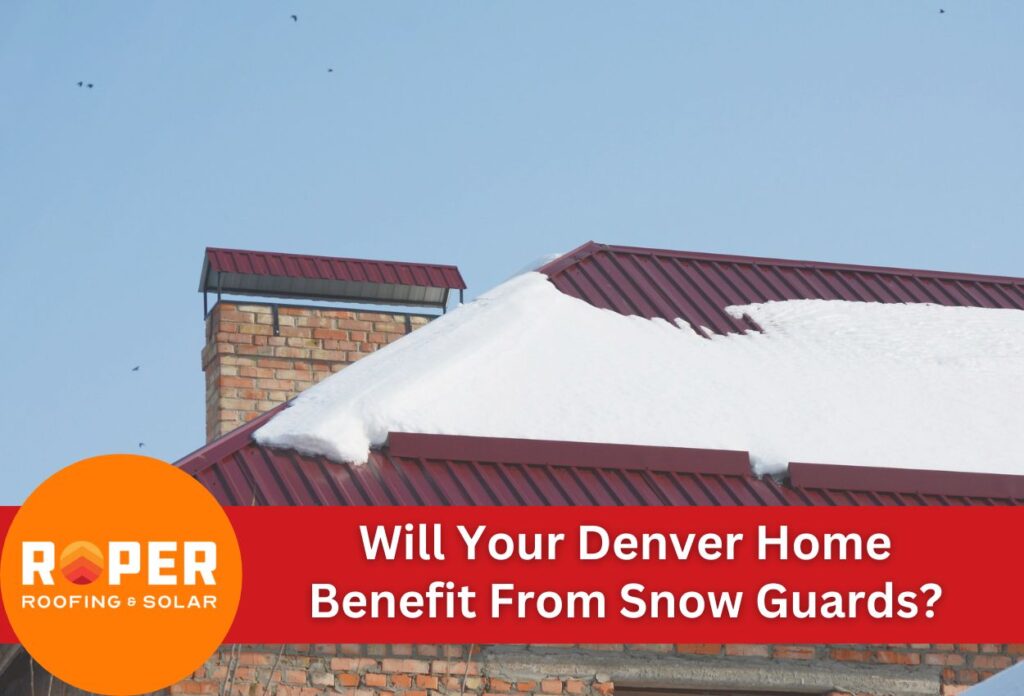
A metal roof presents unique challenges for snow management due to its smooth surface and excellent heat conductivity. Unlike textured shingles that naturally grip snow, metal allows snow to slide freely, creating dangerous avalanche conditions. The metal surface rapidly conducts heat from the interior of the building, causing layers of snow on the bottom to melt while upper layers remain frozen. This creates a lubricated sliding surface that sends large snow masses off roofs without warning.
The thermal properties of metal amplifies the need for snow guard installation. Heat transfer through metal panels creates uneven melting patterns that contribute to ice dam formation along edges. Metal roof snow guards become essential for controlling these sudden releases while maintaining the energy efficiency benefits that metal roofs naturally provide.
Different snow guard styles complement various metal roofing profiles and architectural designs. Standing seam metal roofs work well with clamp-on snow guards that attach without nailing into the roof’s surface. Corrugated metal panels typically require pad-style guards that mount directly to the metal surface, creating effective friction points to control the release of snow.
Considering Professional Installation for Your Denver Property
Experienced roofing contractors evaluate several critical factors when determining the best snow guard placement for Denver properties. Roof pitch, local snow amounts, and building orientation significantly influence installation patterns. Contractors assess prevailing wind directions, which affect snow accumulation patterns across different roof sections. The structural capacity of existing gutters and the proximity of walkways, driveways, and landscaping also guide placement decisions for maximum effectiveness.
Professional installation timing becomes crucial for Denver winters, with optimal scheduling occurring during late fall before heavy snow events begin. Contractors recommend completing snow guard installation between September and November when weather conditions allow safe roof access and the adhesive to properly cure. Early installation ensures systems are fully operational before winter storms arrive, maximizing protection throughout the entire season.
Proper spacing calculations require expertise in local weather patterns and building codes. Professional installers understand how Denver’s elevation affects snow density and wind patterns that impact guard effectiveness. The combination of technical knowledge and local experience ensures snow guards function optimally during extreme weather events common to the Colorado Front Range region.
Making the Right Decision for Your Denver Property
Property owners must evaluate several key factors when determining whether snow guard installation provides value for their specific situation. Roof pitch, material type, and building orientation significantly influence how snow accumulates on your roof, along with how it will release snow. Properties with steep-pitched roofs exceeding a 6/12 slope face a higher risk of dangerous snow slides, making snow guards particularly beneficial. Metal roofing systems require special consideration due to their smooth surfaces that allow uncontrolled snow release.
Geographic factors within the Denver metro area also affect snow guard necessity. Properties at higher elevations or those facing prevailing storm directions experience heavier snow loads requiring enhanced roof snow load protection. Buildings with larger surface areas accumulate more snow, increasing the potential for structural damage and safety hazards. Proximity to areas where people normally walk around, parking spaces, and landscaping elevates the importance of controlled snow release systems for liability protection.
The investment in snow guards typically pays off through reduced maintenance costs, extended roof system life, and improved safety conditions. Properties that experience recurring gutter damage, ice dam problems, or safety concerns from falling snow benefit significantly from professional snow guard installation and comprehensive ice dam prevention strategies.
Protect Your Denver Home with Roper Roofing & Solar Snow Guards
For Denver homeowners, ensuring your roof can withstand the unique winter challenges is vital. Snow guards installed by Roper Roofing & Solar provide an effective solution to manage heavy snowfall and prevent ice dams. These devices are crucial in maintaining the integrity of your roofing system, safeguarding it against the typical freeze-thaw cycles that characterize Denver’s climate.
If you find yourself dealing with roof damage caused by excessive snow, we’re also here to help. Give our team a call today at (720) 475-1065 to discuss your roofing needs and secure your roof against Denver’s harsh winter conditions.