

Determining how many solar panels to put on a roof requires looking at different factors that directly impact your home’s energy production. The number of units needed varies based on your household’s electricity consumption, available roof space for solar panels, and the specific characteristics of your roof structure.
Your home’s monthly energy usage is the foundation for calculating solar panel capacity. Most Denver households consume between 600 to 1,200 kilowatt-hours per month, which translates to different solar panel requirements depending on panel efficiency and local sunlight exposure. The orientation and angle of your roof also play roles in residential solar panel sizing and placement.
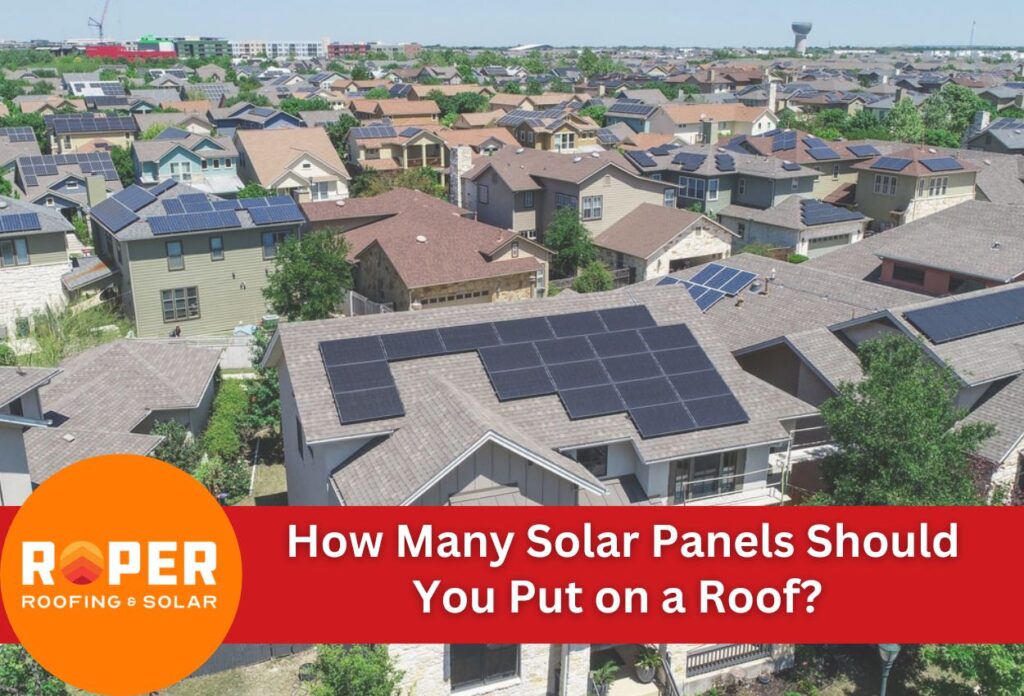
Available roof space for solar panels determines the maximum number of panels your home can accommodate. A typical residential solar panel needs approximately 17 square feet, and most homes need between 15 to 22 panels to achieve energy independence. However, factors like chimneys, vents, and roof pitch can limit the solar panel layout for roofs.
Solar panel installation on the roof requires a professional assessment to ensure structural integrity and optimal energy production. Knowing these factors helps homeowners seamlessly plan their solar project and maximize energy savings for years to come.
Calculating Your Home’s Energy Requirements
Understanding your household’s electricity consumption is the first step in determining how many solar panels you should install. Start by examining your electricity bills from the past 12 months to identify average monthly usage patterns. Most utility bills display kilowatt-hours consumed, which directly correlates to the solar panel capacity needed for adequate energy production.
Seasonal energy patterns significantly influence residential solar panel sizing and placement. Summer months typically show higher consumption due to air conditioning usage, while winter periods may reflect increased heating needs. These fluctuations help establish whether your solar panel installation should target average consumption or peak usage periods.
Future household changes must also factor into solar panel capacity planning. Growing families, electric vehicle purchases, or home additions can substantially increase energy usage. Accounting for these potential changes ensures your solar panel layout accommodates long-term energy needs rather than just current consumption levels.
Calculate your baseline energy requirements by adding monthly kilowatt-hour totals and dividing by 12 for an accurate average. This baseline determines the minimum solar panel capacity needed, though many homeowners opt for systems that exceed their current usage to accommodate future energy increases. A professional assessment of your specific consumption patterns ensures optimal sizing for your solar panels and energy goals.
Measuring Available Roof Space and Layout Options
Accurately measuring roof space for solar panels requires identifying all usable areas while accounting for obstacles that affect panel placement. Start by adding up the total square footage of roof sections with suitable orientation, typically south-facing slopes that receive maximum sunlight exposure throughout the day.
Roof obstacles significantly impact the solar panel layout for roofs and overall system capacity. Chimneys, vents, skylights, and satellite dishes create unusable spaces that must be avoided during solar panel installation projects. These obstructions also require minimum clearance distances, further reducing available installation area.
Different layouts maximize the solar panel capacity of a home based on roof characteristics. String layouts work well for rectangular roof sections, while power optimizers allow panels to function independently around obstacles. The chosen configuration directly influences how many solar panels you can install within the available space.
Roof orientation and tilt angle affect both panel efficiency and spacing requirements. South-facing roofs with moderate slopes provide the best conditions, while east or west-facing sections may accommodate fewer panels due to reduced efficiency. Residential solar panel sizing must also account for these orientation factors when calculating maximum panel capacity.
Professional measurements are necessary for an accurate assessment of usable roof area and to identify the most efficient panel arrangement. Proper spacing between panels and roof edges maintains structural integrity while maximizing energy production potential within your available roof space.
Understanding Solar Panel Types and Their Power Output
Solar panel technology directly affects how many units you should put on a roof by determining the power output per panel and space efficiency. Monocrystalline panels offer the highest efficiency ratings, typically producing 300 to 400 watts per panel, which means fewer panels are needed to achieve your target solar panel capacity.
Polycrystalline panels provide a middle ground with efficiency ratings around 250 to 350 watts per panel. While these panels require slightly more roof space to generate equivalent power, they are often considered a balanced approach for residential solar panel projects because of their lower upfront cost. The lower efficiency also means installing additional panels to meet the same energy production goals.
Another option is thin-film panels, which occupy the most space due to lower efficiency ratings but offer flexibility for unique roof configurations. These panels work well for large roofs where space isn’t limited, but may not suit homes with constrained roof space. Their lightweight design makes them suitable for roofs with weight restrictions.
Panel wattage ratings determine the total number needed for your energy requirements. Higher-wattage panels reduce the quantity needed while maximizing power production within limited roof space. This efficiency significantly impacts solar panel layout for roofs and overall system design.
Additionally, mounting systems influence panel spacing and total capacity. Standard rail mounting requires specific clearances between panels, while newer mounting technologies allow tighter spacing. Understanding these spacing requirements helps optimize your solar panel installation on your roof and determines the maximum panel count for the available space.
Working with Denver’s Climate and Sun Exposure
Denver’s high altitude significantly impacts how many solar panels you should put on a roof by affecting both energy production efficiency and system requirements. At 5,280 feet above sea level, Denver receives approximately 25% more solar radiation than locations at sea level due to the thinner atmosphere. This increased solar intensity means panels generate more power per square foot, potentially reducing the total number of panels needed for adequate energy production.
Colorado’s abundant sunshine creates favorable conditions for residential solar panel installation. Denver averages over 300 sunny days annually, providing consistent energy production throughout most of the year. However, seasonal variations affect solar panel output, with winter months producing significantly less energy due to shorter daylight hours and potential snow coverage on panels.
Temperature fluctuations throughout Denver’s seasons influence panel efficiency and energy output. Solar panels actually perform better in cooler temperatures, making spring and fall particularly productive despite moderate sunlight levels. Summer’s intense heat can reduce panel efficiency, while winter has moderate performance when panels remain snow-free.
Strategic panel positioning maximizes energy capture during varying seasonal sun angles. South-facing installations with 30-degree tilts optimize year-round production, while steeper angles help shed snow during winter months. Understanding these local climate factors ensures an ideal number and sizing of solar panels, and prevents undersized systems that fail to meet energy expectations during less favorable weather periods.
Professional Assessment and Installation Considerations
A professional evaluation ensures your roof can safely support the planned solar panel installation while maximizing energy production within structural limitations. Roofing contractors and certified solar installers examine roof age, material condition, and load-bearing capacity before determining how many solar panels you can install on your roof. This evaluation identifies potential structural reinforcements needed and confirms the roof can handle additional weight from panels, mounting hardware, and accumulated snow.
Installation teams optimize solar panel layout for roofs by balancing energy production goals with structural integrity requirements. Professional installers evaluate roof pitch, orientation, and shading patterns to determine optimal panel placement while maintaining spacing for maintenance access and thermal expansion. They also ensure the project is compliant with local building codes, electrical requirements, and permit specifications that govern residential solar panel installations in Denver.
Expert installation teams also maximize the solar panel capacity of a home by identifying the most efficient use of available roof space. A professional assessment accounts for future maintenance needs, drainage around panels, and electrical conduit routing that amateur installations often overlook. These considerations prevent the need for modifications later while ensuring the system performs as intended.
Working with experienced professionals eliminates guesswork in determining the ideal number of panels and ensures installations meet safety standards and manufacturer warranties. Professional teams provide accurate assessments of your roof’s solar potential while maintaining structural integrity throughout the installation process.
Making the Final Decision on Panel Quantity
Determining the optimal number of solar panels requires balancing energy production goals with practical roof space limitations and household budgets. After calculating energy requirements and measuring available roof space, homeowners must evaluate whether their roof can accommodate the ideal number of panels or if compromises are necessary to work within physical constraints.
Many Denver homes cannot fit enough panels to completely offset energy consumption due to roof size, orientation, or structural limitations. In these situations, maximizing the solar panel capacity of a home becomes more important than achieving complete energy independence. Installing the maximum number of panels that safely fit often provides the best return on investment while significantly reducing monthly electricity costs.
Future energy planning plays a crucial role in residential solar panel sizing decisions. Starting with fewer panels allows homeowners to expand their systems as energy needs increase or budget permits additional investment. This phased approach helps manage initial installation costs while preserving roof space for future additions.
Consider household changes that might affect energy consumption over the next decade, such as electric vehicle purchases, home additions, or lifestyle modifications. Planning solar panel layout for roofs with expansion potential ensures current installations don’t prevent future system growth. Professional solar panel installation services can design systems that accommodate planned expansions while maximizing current energy production within available space and budget parameters.
Optimize Your Denver Home with Roper Roofing & Solar
Ready for lower energy bills? Determining the right number of solar panels for your Denver home doesn’t need to be complicated. At Roper Roofing & Solar, we customize solar solutions that fit your energy consumption and roof layout. Whether you’re looking to understand your home’s energy consumption patterns, calculate your energy requirements, or maximize your roof’s solar capacity, our experts are here to help.
Don’t miss out on the opportunity to make your home more energy-efficient and sustainable. Call us today at (720) 475-1065 to schedule a professional assessment and see how many solar panels your roof can accommodate for optimal energy production. Let Roper Roofing & Solar help you make a final decision that maximizes your investment and meets your household’s energy needs.