

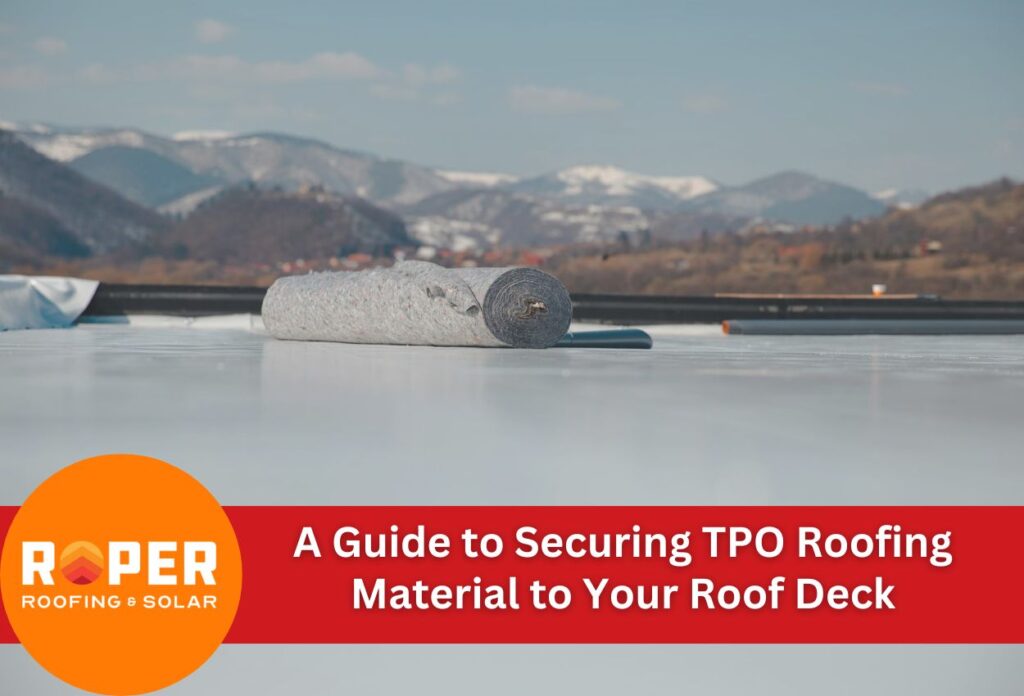
Understanding how to adhere TPO to the deck of a roof correctly ensures your roof will protect your building for decades. Poor adhesion leads to membrane lifting, water infiltration, and premature roof failure. TPO roof installation methods vary based on building requirements, local climate conditions, and structural considerations.
Three primary TPO bonding techniques exist for attaching single-ply roofs:
- Fully adhered systems using contact adhesives
- Mechanically fastened
- Ballasted application
Each method offers distinct advantages depending on your specific roofing project. Proper TPO roof deck preparation is essential regardless of which attachment method you choose, as the condition of the surface directly impacts the membrane’s performance.
The success of your TPO roof installation depends on selecting the appropriate attachment method and executing proper bonding techniques that create a watertight, wind-resistant roofing system. In this blog post, we’ll describe in depth the process of using the fully adhered method of TPO installation.
Things to Keep In Mind Before Starting
Successfully adhering TPO to the roof deck requires specific tools and materials that ensure proper bonding and long-lasting performance. Contact adhesives form the foundation of most fully adhered TPO installations, with water-based and solvent-based options available depending on the project’s requirements. Low-VOC water-based adhesives work well for standard applications, while solvent-based products provide superior bonding strength in challenging conditions.
TPO membrane application requires specialized equipment, including lint-free rollers, adhesive brushes, and spray equipment for larger projects. Safety equipment is non-negotiable when applying TPO membrane adhesive, requiring respirators, non-slip footwear, and fall protection systems. Temperature and humidity monitoring tools help ensure the best possible adhesive curing conditions during installation.
The thickness of the TPO membrane also impacts both performance and adhesive requirements. Standard 45-mil membranes suit most applications, while 60-mil or 80-mil options provide enhanced durability for high-traffic areas. Roof deck material influences adhesive selection significantly, like concrete roof decking, which requires different primers than wood or metal decking systems.
Weather considerations affect TPO bonding techniques substantially as well. Areas experiencing temperature extremes benefit from flexible adhesives that accommodate thermal movement. Primers enhance adhesion on porous surfaces and challenging roof decks, while choosing the right material prevents adhesive failures and ensures your TPO roof installation methods deliver optimal long-term performance across varying environmental conditions.
Preparing Your Roof Deck for TPO Installation
Proper TPO roof deck preparation creates the foundation for successful membrane adhesion and long-term roofing performance. The roofing surface must be completely clean, dry, and structurally sound before beginning any TPO bonding techniques. Start by removing all debris, including loose gravel, old roofing materials, and accumulated dirt that could interfere with adhesive contact.
Inspect the entire roof deck for structural damage, including loose fasteners, cracked concrete, or deteriorated wood sections. These issues must be addressed before applying the TPO membrane, as compromised deckings cannot support proper membrane attachment. Power washing removes stubborn debris from concrete surfaces, while wire brushing effectively cleans metal decking systems.
Moisture content significantly impacts how to adhere TPO to the roof deck successfully. Use moisture meters to verify surface dryness, particularly after rain or cleaning operations. Concrete deckings require complete curing before TPO roof installation methods can proceed effectively.
Different roof deck materials demand specific priming techniques to get the best possible bonding conditions. Concrete surfaces benefit from primers that seal porous areas and enhance adhesive contact. Wood decking requires primers that prevent moisture absorption while creating stable bonding surfaces. Metal roof decks need rust-inhibiting primers that promote adhesion and prevent corrosion.
Apply primers according to manufacturer specifications, maintaining proper coverage rates and drying times. Keep in mind that temperature and humidity conditions while applying the primer can directly affect curing and bonding performance. Attaching single-ply roofs successfully depends on thorough surface preparation that creates the best conditions for membrane adhesion.
Applying Adhesive for Maximum Bond Strength
Achieving maximum bond strength when adhering TPO to the deck of the roof requires precise adhesive application and careful attention to environmental conditions. Contact adhesive must be spread evenly across the prepared roofing surface using proper roller techniques to get consistent coverage without creating thick or thin spots that could compromise the bond.
Begin adhesive application by pouring small amounts of contact adhesive onto the roof deck, then spread it using a lint-free roller in overlapping patterns. Maintain consistent pressure while rolling to cover the area evenly, as the adhesive requires smooth, even distribution without puddles or bare spots that create weak bonding areas.
Most contact adhesives remain tacky for 15 to 45 minutes after application, depending on temperature and humidity conditions. Wind speed, ambient temperature, and relative humidity directly affect how quickly solvents evaporate from the adhesive surface. Keep in mind that installing the TPO membrane too early, while the adhesive remains wet, can cause poor bonding, while waiting too long after the adhesive has dried completely prevents proper adhesion.
The best temperatures for an application range between 45 and 85 degrees Fahrenheit with relative humidity below 80%. High humidity extends the time it takes for the material to cure, while excessive heat makes the solvent evaporate quickly, reducing the time a worker has to get the material in place. Monitor weather conditions continuously during application to prevent installation failures and ensure the membrane adheres to the roof’s deck properly.
Positioning and Securing the TPO Membrane
Once the adhesive is applied, the TPO membrane must be properly positioned. Begin by unrolling the membrane gradually rather than laying out entire sections at once, which prevents wrinkles and allows better control during positioning. Start from one end of the roof section and slowly advance the roll while maintaining steady tension to keep the membrane flat against the adhesive surface.
Avoid stretching the TPO membrane during positioning, as thermal expansion and contraction will cause the material to move after installation. Allow approximately ¼ inch of relaxation per 10 feet of membrane length to accommodate natural thermal movement. This prevents stress points that can lead to splitting or adhesion failure over time.
Air bubbles are one of the most common installation challenges when learning how to adhere TPO to the roof deck effectively. If any air bubbles form, they should be pushed toward the nearest edge using smooth, consistent pressure from a hand roller or broom, however, large bubbles may require lifting the membrane section and repositioning it on the tacky adhesive surface.
Achieving firm contact between the membrane and adhesive requires consistent pressure using the proper rolling techniques. Begin rolling from the center of each membrane section and work outward toward the edges using overlapping passes. Apply consistent downward pressure while rolling to ensure complete contact between the TPO surface and the adhesive layer underneath.
Professional methods at this point in the installation process include the use of weighted rollers for large membrane sections and hand rollers for detailed areas around gaps and the edges of the roof. The rolling process must be completed while the adhesive remains within its bonding window.
Creating Watertight Seams and Edges
Heat welding represents the most critical aspect of TPO roof installation, creating permanent molecular bonds between membrane sections that exceed the strength of the base material. Proper seam welding requires precise temperature control, typically between 400 and 600 degrees Fahrenheit, depending on the thickness of the membrane and the environmental conditions. Automatic welding machines provide consistent heat application and coverage that ensure uniform seam quality across large roof areas.
Overlap measurements must remain consistent throughout the welding process to maintain structural integrity and watertight performance. Standard TPO membrane overlaps measure between 1.5 and 3 inches, with wider overlaps required in high-wind areas or along roof edges. Clean all membrane surfaces thoroughly before welding, removing any dirt, moisture, or adhesive residue that could compromise seam quality.
Special attention to roof gaps, corners, and perimeter areas prevents common sources of leaks in TPO roofing systems. These areas require custom-cut membrane pieces and specialized welding techniques that can work around the complex geometry while maintaining continuous waterproof barriers. Inside and outside corners require careful template cutting and multiple welding passes to ensure both sides are fused.
Temperature monitoring during seam welding prevents overheating that can damage membrane material or underheating that creates weak bonds. Test weld samples on scrap material before beginning production welding to verify proper machine settings. Attaching single-ply roofs successfully depends on consistent welding parameters that account for ambient temperature changes throughout the installation day. Quality control testing of completed seams ensures long-term performance and identifies any areas requiring remedial work.
Quality Control and Long-Term Maintenance Tips
A thorough inspection of your completed TPO installation ensures proper adhesion and identifies potential issues before they develop into expensive leaks. Begin a quality control assessment within 24 hours of completion, examining all membrane areas for complete contact with the underlying adhesive. Look for lifted edges, air bubbles, or areas where the membrane appears loose or wrinkled, as these could mean there was inadequate bonding to the surface during the installation process.
Focus inspection efforts on critical areas, including seam welds, roof gaps, and perimeter edges where leaks most commonly occur. Use a probe or blunt instrument to gently test the strength of the adhesive around these vulnerable zones. A properly adhered TPO membrane should resist lifting and feel firmly attached to the surface of the roof’s deck. Any areas showing poor adhesion require immediate repairs.
Establishing regular maintenance routines protects your TPO roof investment and maximizes the lifespan of the system. Schedule professional inspections twice a year, ideally in spring and fall, to identify potential problems before severe weather arrives.
Simple cleaning practices using mild detergents and soft-bristle brushes remove dirt buildup that can degrade TPO material over time. Avoid harsh chemicals or abrasive cleaning methods that could damage the membrane’s surface and compromise its reflective properties. Additionally, document all maintenance activities and inspection findings to track roof performance trends and plan future repairs. Proper maintenance combined with quality TPO bonding techniques ensures decades of reliable roofing performance.
Secure Your Roof with Roper Roofing & Solar
Ensuring your TPO roofing material is properly adhered to your roof deck is important for long-lasting protection and performance. At Roper Roofing & Solar, we specialize in top-tier TPO installation that guarantees maximum strength and durability against harsh weather. Don’t let an improper installation compromise your roof’s structural integrity!
If you’re unsure about the best approach for your roofing project or need professional assistance, call Roper Roofing & Solar today at (720) 475-1065. Let us help you protect your investment with expert roofing solutions that stand the test of time.