

Wood shake roofs bring natural beauty and character to many Denver homes, but they don’t last forever. Understanding when to replace a wood shake roof is crucial for protecting your property from unexpected leaks, structural damage, and expensive emergency repairs. Most wood shake roofs in Colorado typically last between 20 and 40 years, with their lifespan heavily influenced by our unique climate, from intense UV exposure at our high altitude to dramatic temperature swings and periodic hailstorms.
The harsh Colorado weather accelerates wood shake deterioration, making regular assessment essential for homeowners. Cedar shake roof replacement timing depends on multiple factors, including installation quality, maintenance history, and the specific type of wood used. Many Denver homeowners struggle to identify the subtle early signs of wood roof deterioration, often waiting until visible leaks appear, which typically indicates that advanced damage has already occurred.
Aging wood shake roof problems can be both obvious and more subtle. Identifying these wood shingle roof damage indicators early allows homeowners to plan replacements strategically rather than responding to emergencies. Local roofing professionals familiar with Denver’s specific climate challenges can provide valuable guidance on evaluating your roof’s current condition and remaining lifespan.
Understanding the Typical Lifespan of Wood Shake Roofing Systems
Under ideal conditions, wood shake roofs can last 30 to 40 years, but Denver’s climate can reduce this expectation. The combination of intense sunlight, frequent hailstorms, and extreme seasonal temperature differences can significantly shorten a wood shake roof’s functional lifespan to 20 to 30 years in our region. Many homeowners are surprised to learn that two identical wood shake roofs can age at dramatically different rates depending on their exposure to elements.
Maintenance is important to maximize your wood shake roof’s lifespan. Regular cleaning to remove debris, moss, and algae prevents moisture retention that accelerates decay. Professional inspections every few years help identify and address small issues before they compromise the entire roofing system. Conversely, neglected wood shake roofs in Denver may deteriorate in as little as 15 years, particularly on south and west-facing slopes that receive more direct sunlight.
Preventive treatments like water repellents and preservatives can extend your wood shake roof’s service life by years when applied according to manufacturer recommendations. While these treatments are an additional investment, they’re substantially less expensive than premature roof replacement. Many Denver homeowners find that a diligent maintenance schedule allows their wood shake roofs to perform reliably despite our challenging climate.
Visual Indicators That Replacement Time Has Arrived
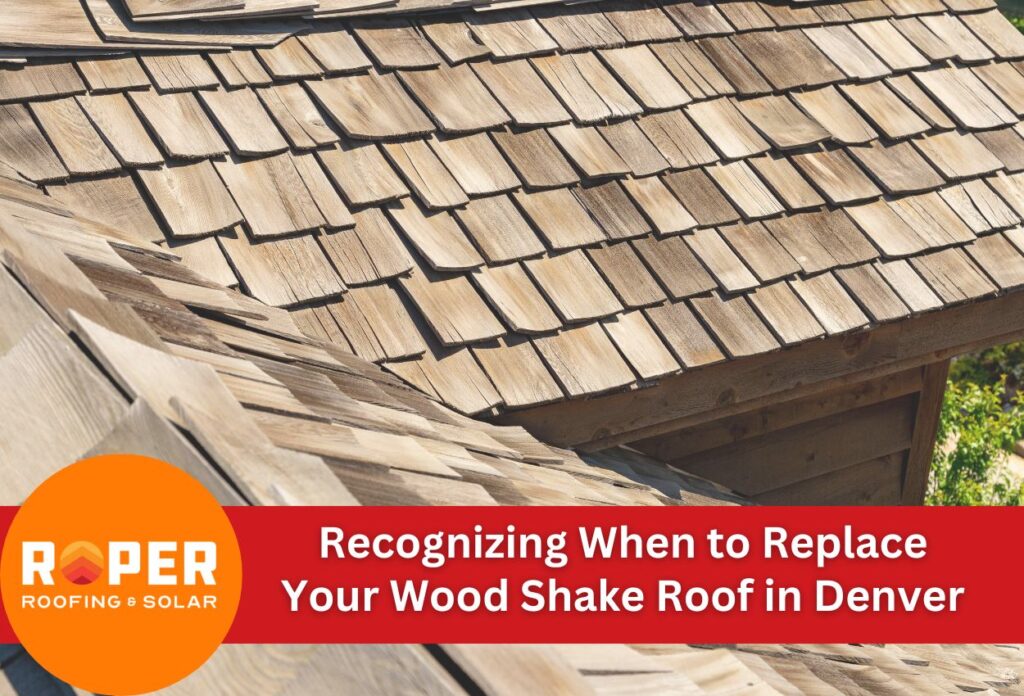
Wood shake roofs show deterioration through several signs that Denver homeowners can spot even from ground level. The most obvious indicator is widespread curling, where shakes begin to cup or curl upward at the edges instead of lying flat. This curling creates gaps that allow water to seep beneath the roof surface.
Similarly, splitting shakes, particularly those with cracks that extend completely through the wood, signal that the material has lost its structural integrity and protective capabilities. Missing shakes create immediate vulnerabilities in your roofing system and typically indicate that the surrounding shakes are also compromised. Discoloration patterns, especially large dark areas, often reveal water damage that has already penetrated the roof’s surface.
More advanced deterioration markers include extensive moss or lichen growth, which traps moisture against wood surfaces and accelerates decay. Thinning shakes that have lost substantial thickness to weathering can no longer adequately protect your home. Professional roofers in the Denver area can identify subtle warning signs, including shake warping, nail popping, or ridge damage that may not be visible from ground level but significantly impact your roof’s performance. When multiple indicators appear simultaneously, replacement rather than repair typically offers the most cost-effective long-term solution.
Structural Warning Signs That Need Immediate Attention
Beyond surface-level deterioration, wood shake roofs can develop serious structural issues that compromise your entire home’s integrity. Sagging or uneven roof planes are critical red flags that indicate the supporting structure beneath your shakes has been weakened by moisture infiltration. This often appears as a noticeable depression or wave-like pattern across sections of your roof. Interior warning signs are equally important — pay attention to cracked ceiling paint, visible roof beams that appear warped, or attic rafters showing signs of rot or moisture damage.
Moisture-related issues often signal severe shake damage requiring an immediate professional assessment. Ceiling stains or discoloration, particularly those that expand after rainfall, indicate active leaks penetrating your home. Inspect your attic regularly for dampness, musty odors, or visible water trails on rafters. Many Denver homeowners first discover serious roof problems when they notice unexplained increases in energy costs, as damaged wood shakes lose their insulating properties and allow conditioned air to escape.
If your home develops interior mold growth, particularly in upper-floor rooms or attic spaces, this strongly suggests moisture penetration through failing wood shakes. During heavy rainstorms, listen for dripping sounds in the attic or ceiling areas. These advanced structural warning signs typically mean your wood shake roof has deteriorated beyond the point where spot repairs will be effective, making full replacement the best solution for protecting your Denver home.
Seasonal Considerations for Wood Roof Replacement in Colorado
Timing is everything when replacing a wood shake roof in Denver. The ideal window for wood roof replacement projects typically falls between late spring and early fall when temperatures are moderate and precipitation is less frequent. May through September offers the most predictable weather conditions, allowing roofing crews to work efficiently without interruptions from snow, ice, or frequent thunderstorms that characterize other seasons in Colorado.
Summer provides longer daylight hours and generally stable weather, but scheduling during peak season (June to August) often requires booking contractors several months in advance. Early fall (September to October) presents another excellent opportunity with mild temperatures and typically dry conditions, while also potentially offering more immediate scheduling availability with quality roofing contractors.
Many Denver homeowners make the mistake of postponing necessary wood shake roof replacement, hoping to squeeze “just one more season” from an already deteriorating roof. This decision frequently backfires as damage progresses exponentially rather than linearly. A roof showing moderate deterioration before winter may develop severe structural issues after enduring months of snow, freeze-thaw cycles, and spring moisture. What begins as a straightforward replacement can quickly escalate to include extensive deck repair, structural reinforcement, and interior damage remediation when replacement is delayed too long.
When to Call Professionals for a Wood Shake Roof Assessment
While homeowners can spot obvious signs of wood shake roof deterioration, professional roofing contractors identify numerous subtle indicators that untrained eyes typically miss. Experienced Denver roofers evaluate shake thickness variation, assess underlying deck condition, and identify early-stage fungal decay that remains invisible from ground level. They also understand how seemingly minor issues like improper flashing installation or ventilation problems accelerate shake deterioration over time.
Professionals use specialized tools to test wood integrity, measuring moisture content within shakes to detect internal deterioration before surface symptoms appear. They can identify improper previous repairs that may be masking serious underlying issues or creating additional stress points on your roofing system. Their trained assessment also includes evaluating the condition of ridge caps, valleys, and transitions — critical areas where most DIY inspections fall short.
Establishing a regular inspection schedule with a qualified Denver roofing contractor provides peace of mind and long-term cost savings. For wood shake roofs less than 15 years old, professional inspections every few years typically suffice. As your roof approaches the 15 to 20-year mark, increasing inspection frequency to every year allows for optimal replacement timing. This helps homeowners budget appropriately for eventual cedar shake roof replacement while maximizing the current roof’s safe service life and avoiding emergency situations that typically cost significantly more to address.
Transitioning from Wood Shakes: Modern Alternatives for Denver Homes
As your wood shake roof reaches the end of its serviceable life, Denver homeowners have excellent modern alternatives that maintain the aesthetic appeal while offering superior performance. Today’s synthetic shake products mimic the texture and natural appearance of traditional wood shakes with remarkable authenticity. These advanced materials withstand Colorado’s intense UV exposure, seasonal temperature changes, and hailstorms while requiring minimal maintenance compared to their wood counterparts.
Composite shakes made from recycled materials offer environmental benefits while providing Class A fire ratings — a significant upgrade from traditional wood. Impact-resistant synthetic options qualify many Denver homeowners for insurance premium discounts, offsetting initial investment costs. Most manufactured shake alternatives come with 30 to 50-year warranties, substantially outlasting traditional wood’s typical 20-year lifespan.
When replacing an aging wood shake roof, consider the long-term value beyond initial costs. While premium alternatives may require higher upfront investment, the longer lifespan, fewer maintenance needs, and enhanced protection deliver a superior return over time. Many Denver homeowners see significant energy efficiency improvements after transitioning from deteriorated wood shakes to modern alternatives with integrated insulation properties. A professional roofing assessment can help determine which alternative best suits your home’s architectural style while providing optimal performance in Colorado.
Protect Your Home with Roper Roofing & Solar
Recognizing the right time to replace your wood shake roof is crucial, especially in Denver. If there are signs of severe wear like widespread splitting, curling of shingles, or missing pieces, it may be time to consider a roof replacement to protect your home from potential damage.
Waiting too long can lead to more significant issues, including structural damage and increased repair costs. Call Roper Roofing & Solar today at (720) 475-1065 for a professional assessment and explore modern, durable alternatives that suit Denver homes and withstand the local weather conditions.
Choosing the right time to replace your roof is not just about improving appearances — it’s a necessary step to ensure the safety and efficiency of your home. Contact Roper Roofing & Solar, and let us help you secure your home with a reliable, high-quality roofing solution.